
Tooth Decay Prevention

What is tooth decay?
Tooth decay begins with the Streptococcus mutans bacteria. These bacteria join with food particles and fluids in the mouth to create plaque, a constantly forming biofilm that sticks to the surface of tooth enamel.
The bacteria in plaque convert the sugars in our foods into lactic acid. When plaque remains on the tooth, these acids erode the calcium phosphate minerals, which make enamel the hardest substance in the body. This process, called demineralization, creates weak spots in the tooth surface.
Over time, a weak spot will become larger and deeper until a hole, or cavity, forms in the enamel.
Treating Tooth Decay and Cavities
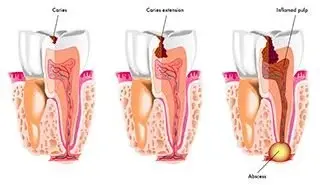
Because tooth enamel isn’t living tissue, it can’t regenerate or grow back. Once bacteria and acids have created a deep enough cavity, only a dentist can repair it by removing the decayed area of the tooth and restoring the tooth’s structure.
Without treatment, a cavity will continue to grow until it erodes the enamel and spreads into the interior of the tooth. Treatment for tooth decay will depend on how far the decay has progressed.
- Demineralization—Early tooth decay
Early signs of demineralization can show up as white spots where minerals have been stripped from the enamel. Demineralization is sometimes reversible with a professional fluoride treatment that remineralizes and strengthens tooth enamel.
- Enamel Decay
For small cavities in the enamel, a filling is generally recommended. The dentist will remove any decay, clean the area, and fill the tooth. Filling options include color-matched composite, silver dental amalgam, and gold fillings.
- Dentin Decay
Dentin lies just below tooth enamel. When decay reaches the dentin, it spreads more quickly because dentin is much softer than enamel. More extensive decay might require a larger filling or a crown.
- Pulp Decay
Left untreated, a cavity can grow until it reaches the living pulp inside the dentin. The pulp contains blood vessels and nerves, and, once damaged or infected, will require a root canal procedure and a crown to save the tooth.
- Extraction
When decay is so extensive that a tooth cannot be saved, extraction becomes necessary. A dental implant is often the best choice to replace a lost tooth because it prevents shifting in the remaining teeth and helps maintain jawbone density.
Preventing Tooth Decay
While there are many options for treating cavities, prevention is always best. Working together with your dental team, you can help prevent cavities with healthy dental habits and proactive treatments:
- Regular checkups can catch and treat early tooth decay before a cavity forms.
- Professional cleanings remove tartar and plaque you might have missed.
- Brush at least twice a day, for at least two minutes each time, to clean plaque from tooth surfaces.
- Floss at least once each day to remove plaque between the teeth and along the gum line.
- Use fluoride toothpaste, a proven way to strengthen and remineralize enamel.
- Consider professional fluoride treatments if you have a higher risk of tooth decay.
- Ask your dentist about sealants to protect molars from decay.
- Make sure your tooth-healthy diet is rich in nutrients like calcium, phosphorus, and vitamin D and low in sugars and acids.